
Description
A Mark is a status a unit puts on enemies, then later spends or counts to trigger a payoff.
Read moreShow less about Mark
Two examples show the shape.
- Tristana puts an explosive charge on her target that blows up a few seconds later. The blast counts every attack she landed while it was ticking.
- Soraka's star leaves a lasting mark. A second cast on the same enemy calls down three extra stars.
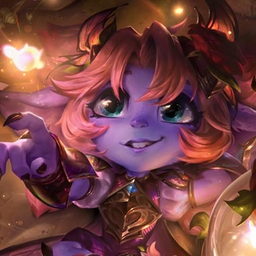
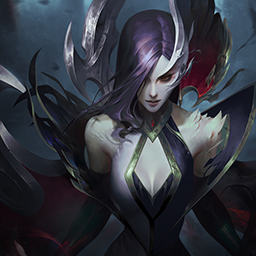
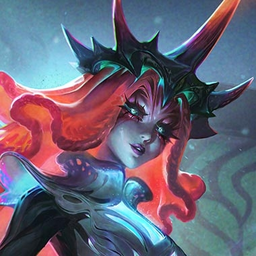
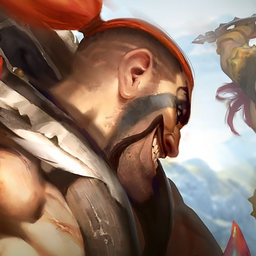
Champions that apply or scale with Marks (4)
4 champions · paste in the game's Team Planner
-
Explosive Charge Attach an explosive charge to the target that lasts 4 seconds. While active, gain infinite range and 60% Attack Speed. After the duration, the charge explodes and splits damage between all enemies within 2 hexes, dealing 175 / 265 / 420 physical damage + 10 / 15 / 25 for each attack while casting. If an enemy with an explosive charge on them dies, it attaches to Tristana's new target.
-
Withering Curse Passive: Gain 25% Omnivamp. Active: Fire a dark blast at 3 nearby enemies, dealing 60 / 90 / 500 magic damage to them and cursing them for 4 seconds. Then, spawn a 2 Hex withering zone for the same duration that deals 33 / 50 / 500 magic damage per second. Cursed enemies take 22 / 33 / 240 more damage per curse.
-
Starcall Call down a star on the current target, dealing 225 / 335 / 1000 magic damage. If a star has previously fallen on them, call down 3 additional stars that each deal 100 / 150 / 1000 magic damage.
-
Whirling Death Passive: Attacks target random enemies in range and apply a bleed that deals 150 / 225 / 3000 physical damage over 12 seconds. Every attack has a 12% chance to deal 50 / 50 / 900% bonus physical damage and apply 2 bleeds instead. Active: Throw two giant axes towards the enemy with the most bleeds. Deal 100 / 150 / 400 physical damage to enemies hit and consume their bleed, instantly dealing the remaining damage. The axes then return, dealing 30 / 45 / 100 physical damage to enemies hit. If no enemies are hit refund 50% of mana spent.







Traits that scale with Marks (1)

Frequently asked questions
-
What does "Mark" actually mean in TFT?
Mark is an umbrella term for any custom status the game stamps onto a unit. A later effect can then read or consume that status.
Unlike crowd control or burn, Mark has no single shared rule set. Each marker defines what its own mark does. Three shapes are live:
- A timed charge is stuck to one enemy and detonates on its own clock. Its payload is partly built from what the caster landed while it ticked.
- A lasting flag sits on an enemy with no timer. It changes what a repeat cast on that same enemy does.
- An ally-side mark is the odd one out. You choose which of your own units carries it, outside of combat, and the trait grants that unit a buff unique to it.
Note: Because every mark is bespoke, always read the source ability's tooltip. Do not assume its behaviour from a sibling marker.
Sources
- Riot — Enchanted Wilds overview ("you can use the Alpha Mark to empower a Riftbeast on your team") (opens in new tab)
- Tristana (TFT) — League of Legends Wiki (Explosive Charge: a timed charge attached to one enemy) (opens in new tab)
- Soraka (TFT) — League of Legends Wiki (Starcall: a lasting flag that upgrades the next cast on the same enemy) (opens in new tab)
-
Are there different kinds of mark in TFT, and how do I tell them apart?
Yes. The tooltip verbs give it away.
Timed-charge marks name a duration and a detonation. The charge sits on one enemy for a set number of seconds, then explodes. Its damage grows with what the caster did during that window.
Repeat-cast marks name no timer at all. The phrase to look for is a conditional like "if a star has previously fallen on them". It turns a second cast on the same enemy into a much bigger one.
Ally-side marks are not applied by damage in the first place. The wording is "use the Mark to grant". You place it on one of your own units, and the payoff is a buff on that unit rather than a debuff on an enemy.
Match the verb to the shape and you will know what the mark is waiting for.
Sources
- Tristana (TFT) — League of Legends Wiki (charge "lasts 4 seconds", then explodes) (opens in new tab)
- Soraka (TFT) — League of Legends Wiki ("If a star has previously fallen on them…") (opens in new tab)
- Riftbeast (TFT) — League of Legends Wiki ("Use the Alpha Mark to grant a Riftbeast their unique Buff") (opens in new tab)
-
Do multiple marks from different sources stack on the same target?
It depends on whether the marks come from different sources or the same one.
Across different sources, each marking source tracks its own state on the target.
- Marks from one ability are not added to another ability's counter.
- The payoffs are independent.
- One enemy can carry a timed charge from one caster and a lasting repeat-cast flag from another at the same time. Each resolves on its own terms.
Within a single source, repeat applications follow that source's tooltip. Same-type debuff effects in TFT also do not stack. The strongest of the same kind applies for its duration. So for debuff-style or amp-style marks, a second copy of the same kind generally refreshes rather than doubles up.
Note: The ally-side mark sidesteps the question entirely. There is one of it, you put it on one unit, and moving it moves the buff.
Sources
- Debuff-overhaul patch notes (no same-type stacking; strongest applies) (opens in new tab)
- Tristana (TFT) — League of Legends Wiki (per-source charge with its own window and payload) (opens in new tab)
- Riftbeast (TFT) — League of Legends Wiki (a single Alpha Mark, granted to one chosen unit) (opens in new tab)
-
How long does a mark last on a target?
It depends on the marking source. No shared system sets a duration.
- A timed charge spells its window out. The current one lasts 4 seconds and then detonates, whether or not anything else has happened.
- A repeat-cast flag carries no timer. It stays on that enemy for as long as the enemy is alive, waiting for a second cast to cash it in.
- An ally-side mark is not on a clock either. You pick its holder outside of combat, so it is already in effect the moment the round starts. It is not applied during the fight.
Note: Enemy-side marks are in-combat state. They do not carry over between rounds the way permanent stat-stacking does.
Sources
- Tristana (TFT) — League of Legends Wiki (explicit 4-second charge window) (opens in new tab)
- Soraka (TFT) — League of Legends Wiki (no timer; the flag waits for the next cast) (opens in new tab)
- Riot — Enchanted Wilds overview (the Alpha Mark is a target you choose, not a timed debuff) (opens in new tab)
-
Can a unit cleanse a mark, or break out of it?
Generally, no.
The closest thing in the current item pool grants Unstoppable at combat start. That keeps the holder acting through displacement and disables while it is up. It is a pre-emptive shrug, not a strip that removes a status already applied.
Marks are not crowd control either. They do not prevent the target from acting, they just flag it for a future payoff. So neither pre-emptive immunity nor reactive cleansing touches them.
Note: The reliable counterplay is to neutralise the marker instead. Kill it, or stall its Mana so it never casts again to cash the flag in.
Sources
- TFT.Tools — current-set items (Quicksilver: "Combat Start: Unstoppable for 18 seconds" — a combat-start effect, not a cleanse) (opens in new tab)
- TFT.Tools — current-set items (Quicksilver: Unstoppable at combat start) (opens in new tab)
- Debuff-overhaul patch notes (same-type debuffs do not stack; strongest applies) (opens in new tab)
-
Does a mark persist if the marker dies, or get cleared if the target dies?
It depends on the mark. Target death does not always clear it.
When the target dies:
- The current timed charge writes an exception into its own rules line. If the enemy carrying the charge dies, the charge moves to the caster's new target instead of being wasted.
- A repeat-cast flag is plain target-side state and goes with the enemy that carried it. So killing a flagged enemy is what denies the bigger second cast.
When the marker dies, the answer comes per source rather than from one rule:
- A flag that only pays out when its own caster casts again needs that caster alive and casting.
- An ally-side mark's buff lives on the unit you placed it on. So it leaves the fight when that unit does.
Note: As always, the source's tooltip is the final word for any specific marker.
-
Does a mark change which target the AI prefers to attack?
No. A mark on its own does not move a unit up the target priority list.
TFT's targeting AI prioritises closeness. Units attack the closest enemy in range and break ties by their current target.
What a mark can change is the marker's own reach. While the current timed charge is attached, the caster gains infinite range and a large chunk of Attack Speed. So it keeps feeding the charge from wherever it is standing.
Note: Positioning still matters, but for the payload rather than the priority. That charge splits its damage between every enemy within 2 hexes of the target. An isolated target eats the whole blast, and a tight cluster divides it.
-
How do mark-based execute thresholds interact with shields and damage reduction?
Shields and damage reduction delay the execute payoff. Execute payoffs read the target's current Health, so anything layered on top of Health delays them.
The clearest current case is an ally-side mark placed on the right holder. Its buff turns any damage that leaves an enemy below 12% Health into an outright kill.
- A shield is a temporary Health overlay that absorbs damage before Health is touched. A shielded enemy stays above that line longer and only becomes executable once the shield is drained.
- Resistances and Durability do the same job more slowly. They cut how much of each hit reaches Health, so the target crosses the threshold later.
Note: Marks are not damage in themselves, so they do not ignore Armor or Magic Resist on their own. Only the damage instances they amplify or trigger do, and only when those instances are inherently true damage.
Sources
- Riot — Enchanted Wilds overview (Alpha Mark on the trait's 5-cost: "it's an execution for low health enemies") (opens in new tab)
- Execute tooltip — League of Legends Wiki (TFT) (opens in new tab)
- Shield tooltip — League of Legends Wiki (TFT) (temporary Health overlay absorbed before Health) (opens in new tab)