
Description
Durability is a percentage damage reduction that cuts incoming damage.
Read moreShow less about Durability
It applies after Armor and Magic Resist and stacks multiplicatively.
Sources include the following.
- The Vanguard trait.
- The Juggernaut trait.
- Steadfast Heart.
- Augments like Gilded Steel.
Listed in: Buffs, Team buffs
Items that grant Durability (7)
-
- +50 Armor
Gain 6% max Health. Take 5% reduced damage from attacks. When struck by any attack, deal 100 magic damage to all adjacent enemies. Cooldown: 2 seconds

-
- +300 HP
- +10% Durability
- +2 Mana Regen
Regenerate 2% of missing Health each second.


-
- +20 Armor
- +20% Crit
Gain 5% Durability. While above 50% Health, instead gain 15% Durability.
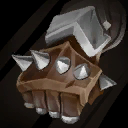
-
- +100 Armor
Gain 12% max Health. Take 10% reduced damage from attacks. When struck by any attack, deal 200 magic damage to all adjacent enemies. Cooldown: 2 seconds
-
- +700 HP
- +18% Durability
- +4 Mana Regen
Regenerate 4% of missing Health each second.
-
- +40 Armor
- +40% Crit
Gain 10% Durability. While above 50% Health, instead gain 30% Durability.
-
- +300 HP
- +10% Durability
Combat Start: Store 30% max Health and 2.5% more every second. On death, unleash the stored Health as magic damage split between enemies within 4 hexes. Unique - only 1 per champion






Champions that grant Durability (2)
2 champions · paste in the game's Team Planner
-
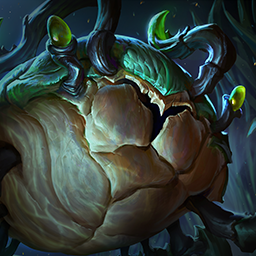
Can You Dig It? Passive: Attacks are replaced by a dance that deals 50 / 75 / 113 physical damage to all adjacent enemies. Active: Burrow underground, gaining 15% Durability for 3 seconds and healing 325 / 400 / 675 over the duration. Green Buff: When allies fall below 50% Health, they restore 15% max Health.
-
Furious Fists Passive: On attack, restore 22 / 40 / 71 Health. Active: Unleash a primal roar, restoring 200 / 265 / 360 Health. Then gain 85 / 100 / 125% Attack Speed, 15% Durability, and is unstoppable for 3 seconds.




Augments that grant Durability (2)
-
 Gilded Steel Gold
 Gain two 5-cost champions. If you field at least one 5-cost champion, your 1 to 4-cost champions gain 8% Durability. K.O. Coliseum Tactician's Crown, 2025
-
 The Golden Dragon Gold
 Gain a Mogul's Mail. Champions holding Mogul's Mail take up +1 team slot but gain 600 Health and 15% Durability. Mogul's Mail gives gold as well as combat power. Dragonlands Championship, 2022
Traits that grant Durability (4)
-
Your strongest Alune cycles to a new phase of the moon after each cast. While the moon is at or below half full, your team gains 7% Durabilty. While above, your team gains 7% Damage Amp.
-
Your team gains Durability. Juggernauts gain more.
-
Your team gains 5% Durability, increased to 10% if 6 or more Zyra plants are alive.
-
At Combat Start and after dropping below 50% Health, Vanguards gain a max Health Shield for 10 seconds.


What counters Durability
Frequently asked questions
-
What does Durability actually do? Is it the same as Armor and Magic Resist?
No. Durability is its own stat.
The TFT wiki defines it as "the reduction of the damage that the champion receives". It is written as a flat percentage: 10% Durability means 10% less damage taken from every type the stat covers.
Armor and Magic Resist (MR) use a different curve. Their damage reduction is R/(100+R):
- 100 Armor blocks 50% of physical damage.
- 200 Armor blocks 67%, and so on.
Durability is a separate, post-resistance multiplier. It applies on top of whatever Armor/MR already mitigated.
Note: They are complementary defensive layers, not the same stat with a different name.
-
How does Durability stack when I have it from multiple sources?
Multiplicatively, not additively. Each source applies a (1 − Durability%) multiplier to incoming damage, and the multipliers compound.
- Two sources of 10% Durability multiply to 0.9 × 0.9 = 0.81. Damage taken drops by 19%, not 20%.
- Two 50% sources stack to 0.5 × 0.5 = 0.25. That leaves 75% total reduction, not 100%.
This is the same "1 − x" stacking the League engine uses for damage reduction generally.
Note: This is why durability has natural diminishing returns the higher you push it.
-
Does Durability reduce true damage?
No. Durability does not lower true-damage hits.
The TFT True damage page states it directly: "True damage ignores resistances (armor and magic resistance), damage reduction, and damage amplification". "Damage reduction" there is the umbrella term that covers Durability. The true-damage hits Durability cannot lower include:
- The percent-max-Health true damage from Burn ticks.
- The true-damage portions of certain abilities.
Note: Durability still helps against the physical and magic damage the same units output, so it is not wasted. It is just not a counter to true damage on its own.
-
Is there a hard cap on Durability — can I reach 100%?
There is no documented hard cap. But the 1 − x stacking math caps you in practice.
Each new source multiplies the surviving damage fraction by another (1 − Durability%). So reaching 100% would need at least one source that already reads 100%. Realistic stacks land in the 30–70% range. They approach but never quite hit 100%.
Note: Patch notes do not reference a numeric cap on the stat itself. The TFT wiki's tooltip simply describes Durability as percentage damage reduction with no ceiling clause. The multiplicative formula is the ceiling.
-
Do Shred and Sunder reduce Durability the same way they cut Armor and MR?
No. Neither touches the Durability stat.
Both are defined against resistances specifically. There is no Durability-shred keyword in TFT's vocabulary at present.
To punch through stacked Durability, you have two options:
- Bring true damage, which ignores it entirely.
- Out-pace it with raw damage and Damage Amp on the attacker's side.
Note: Anti-heal (Wound / Grievous Wounds) is also a separate axis. It modifies healing received, not damage taken.
-
Where does Durability sit in the damage formula relative to Armor/MR and Damage Amp?
Roughly, the order is Armor or MR first, then Durability, then Damage Amp last.
- Raw damage is first reduced by Armor or MR (Magic Resist) via 1/(100+R).
- Then the Durability multiplier(s) reduce it again.
- Then Damage Amp amplifies it post-mitigation.
The TFT Damage Amp tooltip is explicit: "Damage Amp is the amplification of the damage that the champion inflicts post-mitigation". So it is applied after the defensive layers.
Note: True damage skips the resistance, Durability, and Damage Amp layers entirely.
-
Is Durability stronger on tanks I've already itemized with Armor/MR, or on squishier units?
Stronger on tanks, the units that already have lots of effective HP (EHP). Durability multiplies whatever effective HP you already have.
Example: Compare two units with 20% Durability:
- A unit with 1000 HP and 100 Armor has about 2000 EHP against physical damage.
- A unit with 1000 HP and 0 Armor has 1250 EHP.
Both gain the same percent EHP boost. But the absolute EHP gained is much larger on the resistanced unit. That is why Durability sources are usually slotted onto frontliners. They amplify the resistance investment instead of duplicating it.
Note: On a backline carry without resistances, the same Durability% gives a smaller absolute EHP swing.
-
How does Durability compare to Damage Amp on the enemy side — are they inverses?
Mathematically close, but not exact mirrors.
- Damage Amp adds a multiplier to outgoing damage post-mitigation.
- Durability adds a (1 − x) multiplier to incoming damage.
Example: A 20% Damage Amp on the attacker and a 20% Durability on the defender do not cancel. The attacker's 1.20× and the defender's 0.80× multiply to 0.96, a small net reduction in damage.
They also stack differently:
- Damage Amp values across multiple sources stack additively per source bucket (per Mortdog's public explanation).
- Durability stacks multiplicatively.
Note: So the two scale very differently as you pile more on.