
Description
Sunder is a debuff that reduces the target's Armor.
Read moreShow less about Sunder
The named Sunder keyword works like this.
- It cuts Armor by a percentage, commonly 30%.
- It lasts for a duration.
- It does not stack.
- A second Sunder source on the same target adds nothing.
Other sources instead subtract a flat number of Armor. Those work differently.
- The cut lands per hit or on a timer.
- These cuts keep adding up.
- The floor is 0 Armor.
Items that apply Sunder (4)
-
- +250 HP
- +20 MR
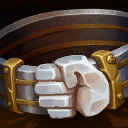
30% Sunder enemies within 2 hexes. Gain 15 Armor and Magic Resist for the first 15 seconds of combat. Sunder: Reduce Armor

-
- +15% AD
- +20% AS
- +20% Crit
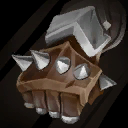
Attacks and Ability damage 30% Sunders the target for 3 seconds. This effect does not stack. Sunder: Reduce Armor

-
- +500 HP
- +40 MR
30% Sunder enemies within 3 hexes. Gain 50 Armor and Magic Resist for the first 20 seconds of combat. Sunder: Reduce Armor
-
- +45% AD
- +40% AS
- +40% Crit
Attacks and Ability damage 30% Sunders the target for the rest of combat. This effect does not stack. Sunder: Reduce Armor




Champions that apply Sunder (4)
What enables Sunder (4)
4 champions · paste in the game's Team Planner
-
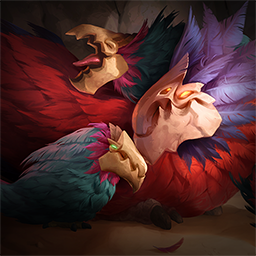
Deadly Plumage Gain 50% Attack Speed for the next 5 attacks. These attacks are replaced with feathers that deal 73 / 108 / 165 physical damage and reduce Armor by 2 .
-
Flock Family Summon 4 untargetable Tiny Beaks nearby for 5 seconds. Whenever Mama Beak attacks, Tiny Beaks attack the same enemy, dealing 22 / 33 / 52 physical damage. Orange Buff: Dealing physical damage reduces enemy Armor by 2.
-
Rage Gene Passive: Gain 5 / 5 / 50 Rage per second and 5 / 5 / 20 Rage per attack. Active: Transform into Mega Gnar and leap into the largest group of enemies within 3 hexes. Then, deal 100 / 150 / 2000 physical damage to enemies within 2 / 2 / 10 hexes, reduce their Armor and Magic Resist by 15 / 20 / 250 , and Stun them for 1 / 1 / 15 second. Mega Gnar gains 400 / 600 / 15000 Health, and replaces his Ability with Grab n' Throw. Grab n' Throw: Throw the target at the farthest enemy, dealing 380 / 570 / 9000 physical damage to them and 135 / 205 / 4500 physical damage to enemies they pass through. If there's only 1 enemy left, throw them off the battlefield instead.
-
Final Spark Passive: On cast, all allies that share a trait with Lux gain 3 / 3 / 100 mana. Active: Fire a laser towards the most enemies in a line that deals 375 / 565 / 6500 magic damage, reduced by 25 / 25 / 10% for each enemy hit (minimum 40%). Coven Bonus: Reduces the Armor and Magic Resist of targets hit by 8 for the rest of combat.











Augments that apply Sunder (1)
What enables Sunder (1)
Silver (1)
-
 Corrosion Silver
 Enemies in the first two rows lose 4 Armor and Magic Resist every 2 seconds.
Traits that apply Sunder (1)
-
Caustic damage 30% Shreds and Sunders enemies for 4 seconds.

Shred: Reduce Magic Resist
Sunder: Reduce Armor

Wisps that apply Sunder (2)
What enables Sunder (2)
- Infliction Combat
Slow, Burn, Shred, and Sunder enemies for 8 seconds.
- Tattered Armor Combat
30% Shred and Sunder enemies for 10 seconds.
What Sunder counters
See also
Frequently asked questions
-
What is Sunder in TFT and how much Armor does it remove?
Sunder is the standard debuff that removes a percentage of a unit's Armor. While a unit is Sundered, its Armor drops by a fixed percentage for the listed duration.
On most current item-applied sources the default is 30% Armor for 3 seconds. Attacks and Ability damage apply it.
The cut is a percentage, not a flat number. So it scales with the target's Armor pool. The more Armor the enemy has stacked, the more raw Armor is removed. This is why Sunder is the AD-side (Attack Damage) counter to heavy frontlines. It mirrors Shred on the magic-resist side.
Sources
-
Does Sunder stack from multiple sources?
No. The percent-Sunder keyword does not stack.
When two Sunder sources hit the same target, only one application is active at a time. The strongest active debuff takes priority for its duration. The percentages do not add together. Item tooltips say this outright: "This effect does not stack."
In practice, two Sunder items on the same carry do not double the Armor cut.
Note: Shred works the same way on the magic-resist side. This is Riot's standard treatment of these resistance debuffs.
-
How is percent-Sunder different from flat Armor reduction?
They are separate keywords with different stacking behaviour.
- Sunder is percent-based. It removes a fraction of the target's current Armor and follows the "does not stack" rule.
- Flat Armor reduction subtracts a fixed number from the Armor stat. It follows different stacking rules, even when its tooltip reads "reduce Armor" too.
Order of operations matters. The game applies the flat reduction first. Percent Sunder then works on the remaining Armor.
Note: Stacking flat reduction in front of Sunder makes the percent step less impactful. It works against a smaller Armor pool.
-
Where does Sunder come from in TFT — items, abilities, or traits?
All three.
- The most common source is item passives that Sunder on attack or Ability damage. These are the percent-Armor-reduction items players build for AD-heavy (Attack Damage) boards.
- Specific champion abilities and trait actives also apply Sunder. Their values and durations vary per source and per patch.
- Augments and charms can grant Sunder as well.
The Sunder keyword works the same no matter the source. What differs is the duration, the percent and the trigger condition.
Note: Always check the source's own tooltip for the exact value and timing on the current patch.
Sources
- Last Whisper (TFT) — League of Legends Wiki (item-applied Sunder) (opens in new tab)
- Utility Sources — Burn, Shred, Sunder, Stun and more — LeDuck (Tacter, lists item/ability/augment Sunder sources) (opens in new tab)
- Adverse Effects — Tacter (per-champion percent and flat sources) (opens in new tab)
-
If Sunder is reapplied while it's already active, what happens to the duration?
The strongest active Sunder takes priority for its remaining duration.
- Applying the same percent again does not add a second instance.
- A weaker reapply does not override a stronger one that is already running.
In practice, two carries each running 30% Sunder are not better than one. Only one debuff is active at a time.
Note: Whether the timer refreshes on each tick is not officially documented. Players have observed that continuous attack uptime from a Sunder source keeps the debuff applied through a fight.
-
Can Sunder reduce a unit's Armor below zero in TFT?
No. TFT floors resistances at 0.
Once Sunder and other Armor-reduction effects bring a target to 0 Armor, further reduction is wasted. Incoming physical damage is then fully unmitigated, so it is effectively true damage. But it is not amplified. The Armor reduction multiplier tops out at 1.0×.
This is a deliberate split from base League of Legends, where negative Armor can amplify damage. TFT patched the behaviour years ago, so a specific carry's Armor reduction could no longer push the stat below 0.
Note: The 0-armor floor remains in place on the current patch.
-
What's the difference between Sunder and Shred?
They are mirror keywords on opposite resistances.
- Sunder is the percent-Armor reduction debuff. It lowers the target's Armor, so physical damage (AD, Attack Damage) hits harder.
- Shred is the percent-Magic-Resist debuff. It lowers the target's Magic Resist (MR), so magic damage (AP, Ability Power) hits harder.
On item-applied sources the default is 30% for each. Durations and stacking rules are similar, both follow "does not stack". Pick by your carry's damage type: Sunder for AD boards, Shred for AP boards.
Note: On mixed-damage boards, one of each is common. Each only affects its own resistance.