
Description
A Summon adds a unit to the field, either temporary or permanent.
Read moreShow less about Summon
It covers several ways a unit can arrive:
- Ability summons, pets and minions like Mama Beak's Tiny Beaks, Zyra's plants, or the Spirit Walker Yorick leaves behind when he dies.
- Trait-spawned minions and relics.
- Resurrect or revive of fallen allies.
- Bench-to-field arrivals.
Summon-buff augments and the Summoner trait scale these.
The Sprykin trait's Big Furry Friend, the BFF, is a summon too. So is the Rider you seat on it. That is why the emblem, augment and wisp that read it all land here.
Note: Bench is the storage row itself, its slots and the units arriving into it. Summoning is the act of putting a unit on the field. Clone means making an exact copy of an existing unit, not summoning a new one.
Items with Summon effects (1)
-
- +15 Armor
- +15 MR
- +10% AS
The holder gains the Sprykin trait. If the holder is riding the BFF, gain an additional 20% 15 15
Gain the Big Furry Friend. Drop a Sprykin on the BFF to pick its Rider.
- 3
- The Rider gains 15% and 15%
- 5
- 40% 35% , and 50% of the BFF's Ability applies to your Sprykin champions.
- 7
- 55% 55% , and 100% of the BFF's Ability applies to your Sprykin champions.



Champions with Summon effects (7)
Cost selected
Trait selected
Scaling selected
Range selected
Role selected
7 champions · paste in the game's Team Planner
-
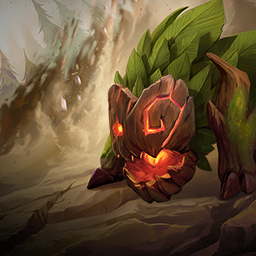
Razor Leaves Summon five razor-sharp leaves that converge on the current target, dealing a total of 340 / 510 / 770 physical damage and applying 20% Wound and 1% Burn for 4 seconds. Scarlet Buff: Cinderling gains 22% Attack Damage each cast. Wound: Reduces healing received. Burn: Deals a percent of the target's max Health as true damage every second. -
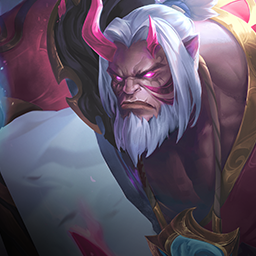
Last Rites Passive: On death, spawn a Spirit Walker with 330 / 634 / 1171 max Health which immediately taunts, forcing enemies to attack it. Active: Restore 280 / 325 / 435 Health and strike the target, dealing 150 / 225 / 340 physical damage.
-
Arise! Gain 150% Attack Speed and summon 2 soldiers for the next 6 attacks. These attacks are replaced by commands which direct each soldier to deal 46 / 69 / 110 magic damage per attack. -
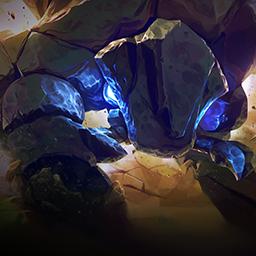
Rock and Roll Passive: On death, split into two Kruglettes with 182 / 338 / 608 Health which immediately taunt, forcing enemies to attack them. Active: Gain 175 / 225 / 325 max Health, then roll into the target, dealing 223 / 358 / 620 damage. Slate Buff: On death, Krug and Kruglettes Shield allies for 8% max Health.
-
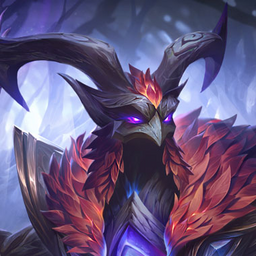
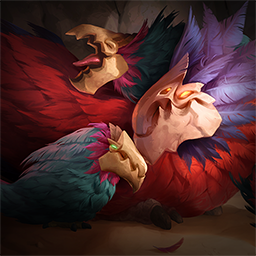
Flock Family Summon 4 untargetable Tiny Beaks nearby for 5 seconds. Whenever Mama Beak attacks, Tiny Beaks attack the same enemy, dealing 22 / 33 / 52 physical damage. Orange Buff: Dealing physical damage reduces enemy Armor by 2.
-
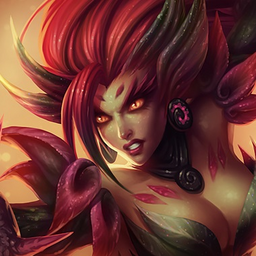
Rampant Growth Spawn 2 / 2 / 4 plants around the battlefield that attack the nearest enemy 10 times. Each attack deals 35 / 53 / 225 magic damage. -
Sow the Seeds Passive: After every 650 / 650 / 300 damage blocked, a sapling jumps towards a nearby enemy and deals 81 / 145 / 2795 magic damage. On death, 3 / 5 / 10 saplings jump out. Active: Deal 69 / 124 / 3726 magic damage to target and restore 330 / 400 / 2000 + 10 / 10 / 100% missing Health.










Augments with Summon effects (3)
What enables Summon (3)
Gold (1)
-
 Small Furry Friend Gold
 While Sprykin is active, gain a second BFF summon that is 45% as powerful. Gain a Teemo, a Veigar, and a Kobuko.
Silver (2)
-
 Dummify Silver
 Lose all champions on your board and bench. Gain a Training Dummy with 60% of their combined health. The dummy gains 1150 Health per stage. Gain a random non-tank 2-star 2 cost champion.
-
 The Tower Silver
 Gain a giant Training Dummy. Every 4 seconds, it zaps the 3 nearest enemies dealing 5% max Health true damage.
Traits with Summon effects (4)
-
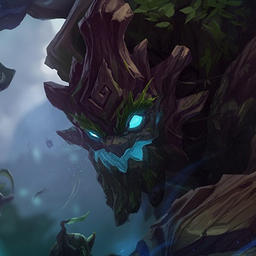
Gain placeable Elderwood plants.
-
Gain the Big Furry Friend. Drop a Sprykin on the BFF to pick its Rider.
-
Summoners empower their summons in different ways.

Yorick: +30% Health
Azir: +20% Damage
Mama Beak: +45% Damage
Zyra: +4 Plant Attacks
-
Your team gains 5% Durability, increased to 10% if 6 or more Zyra plants are alive.


Wisps with Summon effects (9)
What enables Summon (9)
- Found Friend Combat
Gain a temporary Training Dummy with a Giant's Belt.
- Homing Fireflies Combat
Your Casters spawn a firefly per 20 Mana spent. Each deals 110 magic damage.
- Nature's Ally Combat
Every 3 ally deaths, summon a random Riftbeast.
- Petrified Dummy Combat
Your first champion to die turns into a 900 Health dummy with their defenses.
- Potted Lifebloom Combat
Gain a temporary Lifebloom.
- Potted Stonebark Combat
Gain a temporary Stonebark Tree.
- Returning Friend Combat
Gain a temporary Training Dummy with two Giant's Belts.
- Snacktime! Combat
The BFF eats enemies he damages under 16% Max Health.
- Training Yard Combat
Gain 2 Training Dummies each with a random tank item.
Frequently asked questions
-
What does "summon" mean in TFT?
A summon is a secondary unit added to the board by an ability, item, augment, trait, or Wisp. Examples are soldiers, plants, beasts, spirits, mini-pets, trait-spawned minions and relics.
Summons fight alongside your champions. They can move, attack, and be targeted by enemies. But they are not shop-bought champions:
- You do not place them on the bench.
- You do not normally equip them.
- They have their own scaled Health, Attack Damage and Ability Power pool, tied to whatever spawned them.
Summon-scaling traits and augments exist because summons form their own stat-class. One current trait empowers each summoner's own summons in a different way. Another gives you placeable plants whose max Health and Ability Power rise with that trait's star level.
Sources
- Summoner (TFT) — League of Legends Wiki ("Summoners empower their summons in different ways") (opens in new tab)
- Riot — Enchanted Wilds overview ("Elderwood is a summon trait…"; "Plants gain Max Health and Ability Power per Elderwood Star Level") (opens in new tab)
- Template:TFT pet — League of Legends Wiki (summoned-unit stat block) (opens in new tab)
-
What's the difference between a summon and a clone?
A clone is a duplicate of a unit you already have. It copies that unit's star level, usually its stats, and sometimes its items. It stands on the board as a separate body.
A summon is a distinct, pre-defined entity created from scratch by the trigger: a soldier, a plant, a beast, a spirit. It has its own kit and its own scaled stats. It copies nothing from a board unit.
Items are the one place the two overlap more than people expect. Most summons carry none. But a current Wisp spawns a Dummy that arrives holding the items of the tank that died.
Both are "non-shop" units. Both benefit from active traits. Neither adds to your trait piece counts. They just originate differently.
Note: See clone for the duplicate-of-an-existing-unit case.
Sources
- Clone tip — League of Legends Wiki ("a specific type of pet that is a copy of a champion") (opens in new tab)
- Summoner (TFT) — League of Legends Wiki (summons are the trait's own entities, not copies of a board unit) (opens in new tab)
- op.gg — Enchanted Wilds set guide (Memorial Dummy Wisp: "Your first itemized tank spawns a Dummy with their items on death") (opens in new tab)
-
Do summoned units count toward the summoner's traits?
No. Trait bonuses are counted from the champions you field. Each champion carries an origin and a class, and meeting that count is what grants the bonus. A summon is a separate entity, not another copy of the champion that spawned it. So it never pushes a trait to its next breakpoint.
Summon-scaling traits work the other way round. They read how many summons are alive, or how strong they are, and pay out from that.
- One current trait empowers each of its members' summons in a different way. It improves every one of those effects at its higher breakpoint.
- Another gives the whole team extra Durability, doubled once enough of its plants are alive at the same time.
Note: Reading summon state is not the same as counting summons as trait pieces.
Sources
- Champions (TFT) — League of Legends Wiki ("Satisfying the origin or class conditions grants bonus effects") (opens in new tab)
- Summoner (TFT) — League of Legends Wiki (per-champion summon empowerment, improved at the higher breakpoint) (opens in new tab)
- Thornmaiden (TFT) — League of Legends Wiki (team Durability that doubles when enough plants are alive) (opens in new tab)
-
Can I put items on a summoned unit?
No. The 3-item-per-unit rule documented on the Item page applies to champions. Summoned units are not champions for the purpose of equipping. There is no slot UI (user interface) on them, and the game refuses item drops onto them.
A summon can still arrive already carrying items when its source says so. One current Wisp spawns a Dummy holding the items of your first itemized tank when that tank dies. Even then the items came with the spawn. You can't add or swap any afterwards.
Note: Otherwise, if a summon's strength scales, it scales off the summoner's items, level, Ability Power, or Attack Damage. It does not scale off anything the summon carries.
-
Can summons take damage and be killed?
Usually, yes. Summons have their own Health, Armor, and Magic Resist. They take damage from enemy attacks and abilities like any other unit on the board. They disappear when their Health hits zero or their duration runs out, whichever comes first.
Some are built to soak exactly that. A current on-death summon spawns with a set max Health and immediately taunts, forcing enemies to attack it instead of your carries. Summon-scaling traits pump this pool and make spawned units tougher. But they still die normally.
Note: A few summons are spawned untargetable on purpose. A current ability summons four helper birds that enemies simply cannot attack for the seconds they are out.
Sources
- Yorick (TFT) — League of Legends Wiki (on-death Spirit Walker spawns with its own max Health and taunts) (opens in new tab)
- Mama Beak (TFT) — League of Legends Wiki ("Summon 4 untargetable Tiny Beaks nearby") (opens in new tab)
- Template:TFT pet — League of Legends Wiki (Health / Armor / Magic Resist stat block on summons) (opens in new tab)
-
How long does a summon last?
It depends on the summon, and the spell text tells you which kind you have.
- Many ability summons carry a fixed duration and despawn when the timer ends. A current ability summons four helper birds "for 5 seconds", and that number scales with Ability Power.
- Others carry no timer at all and stay until something kills them. An on-death summon left behind by a dying champion holds the board for the rest of the fight. Trait-spawned plants you place before the round persist as board fixtures rather than expiring.
Note: Across-round persistence is the rare case. Most summons are cleared at round end, along with the rest of the combat board.
Sources
- Mama Beak (TFT) — League of Legends Wiki ("Summon 4 untargetable Tiny Beaks nearby for 5 seconds") (opens in new tab)
- Yorick (TFT) — League of Legends Wiki (on-death summon with no duration clause) (opens in new tab)
- Riot — Enchanted Wilds overview ("you'll gain placeable Elderwood plants, each with their own role in the ecosystem") (opens in new tab)
-
Do summons trigger the summoner's on-death effects? Do augments apply to them?
No to the first. On-death effects are tied to the unit they are attached to. A summon dying is not the summoner dying. The current on-death summons make this plain in reverse: the champion has to die before the spawn happens. So the trigger belongs to the champion, never to what it left behind.
For the second question, most start-of-combat augments only apply to units already on the board when combat starts. So summons spawned mid-fight miss those windows. Augments and items that explicitly read "summoned units" or "allies" are the ones that reach them.
Note: See on-death for the source-side rule.
Sources
- Known Bugs/Interactions — TFTHub (start-of-combat augments don't apply to mid-combat summons) (opens in new tab)
- Yorick (TFT) — League of Legends Wiki (the summon fires on the champion's own death) (opens in new tab)
- Summoner (TFT) — League of Legends Wiki (the trait names summons explicitly in order to buff them) (opens in new tab)
-
Can I lose a round if only my summons are left alive?
Generally, no. A round is decided when one side runs out of fightable units, and active summons count as fightable for that check. If your last champion dies but a summon is still on the board attacking, combat continues. It goes on until that summon is killed or its duration ends.
Note: A separate rule bears on the score-out math. Only real board units, not summoned units, count toward the player damage your opponent takes. So leaving a tanky summon alive does not spare you damage the way a surviving champion would.