
Description
Invulnerable is a state that prevents all incoming damage for a duration.
Read moreShow less about Invulnerable
The unit can still be targeted and attacked. It just takes no damage.
Note: It is distinct from Untargetable, which prevents the unit from being targeted at all.
Listed in: Buffs
Sources that apply it to themselves
What enables Invulnerable (2)
Champions that grant Invulnerability (1)
1 champion · paste in the game's Team Planner
-
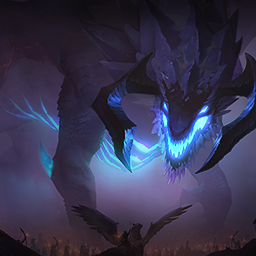
Heat Without Equal Passive: Attacks deal 75 / 75 / 100% damage to enemies adjacent to the target. Active: Become invulnerable and fly into the air. On return, stun all enemies for 1.25 / 1.25 / 99 seconds, gain 15 / 15 / 100% Omnivamp, and Ignite them for 3 / 3 / 99 seconds. Ignited enemies take 2 / 2 / 20% max Health physical damage per second. Replace this ability with Flame Breath and immediately cast it. Flame Breath: Spew fire at the most enemies in a line through the target, dealing 305 / 465 / 7200 physical damage, reduced by 20% for each enemy it passes through (minimum 20%.) Ignite those enemies for 3 / 3 / 99 seconds. Elder Dragon Buff: Damaging an enemy below 12% Health executes them.


Artifacts that grant Invulnerability (1)
-
- +25 Armor
- +25 MR
- +25% AP
Once per combat at 40% Health, become invulnerable and untargetable for 3 seconds. Unique - only 1 per champion

What Invulnerable counters
See also
Frequently asked questions
-
What does invulnerable actually mean — does it block true damage too?
Yes. Invulnerable is a binary status that reduces all damage taken to 0.
- Physical, magic, and true damage are all zeroed for the duration.
- It is not a percent reduction, and it has no threshold.
- While the buff is up, the unit takes literally no HP loss from any damage source.
- Damage-triggered effects on the unit do not fire either. One example is on-hit shred application that requires landing damage.
Note: Once the duration ends, the unit takes damage normally on the very next attack.
-
Invulnerable, untargetable, and stasis — what's the difference?
They are three different protection layers.
- Invulnerable means the unit takes 0 damage but is still a valid target. Basic attacks and abilities can still pick it. They just deal nothing.
- Untargetable means the unit cannot be selected as a target by basic attacks or new abilities at all. But already-applied damage-over-time effects continue ticking on it.
- Stasis is the strongest. The unit is invulnerable AND untargetable AND cannot move, attack, cast, or use items for the duration.
Note: Many TFT items and trait actives stack the first two. They grant invulnerable plus untargetable in the same window, for full protection.
Sources
- Invulnerability — League of Legends Wiki ("Untargetability...is explicitly not considered invulnerability") (opens in new tab)
- Tip data: Stasis — League of Legends Wiki ("unable to control its movement, declare attacks, cast abilities... while also being invulnerable and untargetable") (opens in new tab)
-
Can an invulnerable unit still be stunned, slowed, or shred?
Yes. Invulnerable specifically blocks the damage layer. It does not block the disable or debuff layer.
- Stuns, knock-ups, slows, and chills still land normally on an invulnerable unit.
- Even resistance shreds (Armor / Magic Resist reductions) and anti-heal still apply. They are debuffs, not damage.
The practical consequence: a unit that is invulnerable but not also CC-immune can be stunned mid-window. It then loses the ability to cast or attack, and walks out of the buff with debuffs already on it.
Note: To block CC you need a separate CC-Immune effect.
-
Can invulnerable units still be healed, shielded, or buffed during the window?
Yes. The wiki is explicit that invulnerability does not prevent healing or health costs.
All of these still go through and stack normally on the invulnerable target:
- Any heals from allies.
- Regen.
- Omnivamp on a teammate.
- Every shield applied to it.
- Self-buffs such as attack speed, ability power, and durability stacks.
Note: The window is therefore often used as a free top-up. The unit takes no damage, builds shields, and gets healed at the same time. Then it re-enters the fight at higher effective HP than it left at.
-
Does anything in TFT bypass invulnerability — can true damage or executes get through?
No documented TFT-side bypass exists.
Invulnerability zeroes true damage along with everything else. No TFT item, trait, or augment is currently documented as ignoring invulnerability.
The wiki lists only two narrow exceptions. Both come from League's main map, and both exist there for technical reasons. One is a champion passive and one is a base structure. Neither has an analogue here.
Note: Treat invulnerable as a hard wall while it lasts. The only way the carry dies during the window is if the duration runs out and damage lands on the next tick.
Sources
- Invulnerability — League of Legends Wiki ("Damage that ignores invulnerability exists only where necessary for technical reasons") (opens in new tab)
- True Damage (TFT) — League of Legends Wiki ("ignores resistances ... damage reduction, and damage amplification" — invulnerability is a separate damage-event class) (opens in new tab)
-
Does damage-reflection still trigger when attacking an invulnerable target?
Yes. The wiki is explicit: an invulnerable champion with thorns-style reflection will still reflect damage.
The basic-attack event still fires when the attack hits. The reflection effect keys off the hit event, not off damage actually being dealt. So the attacker eats the magic-damage reflect even though their attack did nothing.
Note: The same logic works the other way. Hitting an invulnerable unit that has thorns is a clean lose-lose for the attacker. They spend a full attack cycle and pay reflect damage for zero return.
Sources
- Invulnerability — League of Legends Wiki (engine rule: thorns-style reflection still triggers against invulnerable targets) (opens in new tab)
- Bramble Vest (TFT) — League of Legends Wiki ("When struck by any attack, deal 100 magic damage to all adjacent enemies", 2-second cooldown) (opens in new tab)
-
How is invulnerable different from durability?
Different shape, different power.
Durability is a percent damage reduction:
- A 30% durability buff means the unit takes 70% of incoming damage.
- Multiple durability sources stack multiplicatively. 50% × 50% lands at 75% reduction, not 100%.
- Durability shaves damage. It never zeroes it.
- It does not protect against true damage.
Invulnerable is binary. For the window it is up, the unit takes 0 damage from every source, including true damage.
Note: Durability is the gradient version of damage reduction. Invulnerable is the on/off switch.
Sources
- Tip data: TFT Durability — League of Legends Wiki ("reduction of the damage that the champion receives") (opens in new tab)
- True Damage (TFT) — League of Legends Wiki ("ignores resistances, damage reduction, and damage amplification" — durability does not block true damage; invulnerable does) (opens in new tab)
-
What happens when invulnerability expires mid-combat — do DoTs tick through the window?
The window ends and damage lands normally on the next tick. The buff does not extend, refund HP, or grant a grace period afterward.
Damage-over-time effects such as burns and bleeds do not tick through the window:
- While the unit is invulnerable, each tick deals 0, like everything else.
- The damage is not stored or paid back when the buff drops.
Contrast this with untargetable, where already-applied DoTs keep ticking through.
Note: Invulnerable is a clean window of total safety. As soon as it ends, the unit is fully exposed. Plan finishers and re-positioning around the duration's exact endpoint.
Sources
- Invulnerability — League of Legends Wiki (damage reduced to 0 includes damage-over-time) (opens in new tab)
- Tip data: Untargetable — League of Legends Wiki ("Effects that have already been applied are not invalidated" — contrast with invulnerable, which zeroes damage from any source) (opens in new tab)