
Description
Damage Over Time is damage that lands across several seconds instead of in one hit.
Read moreShow less about Damage Over Time
The set spells it three ways.
- A bleed.
- A poison.
- Plain wording like "damage over a number of seconds".
None of them share a keyword. So there is no single rule behind them.
The damage type also varies by source. Different sources tick as physical, magic, or true damage. This means no one resistance answers all of them.
Burn is the exception and keeps its own page. It is a real keyword with a rules gloss.
Note: Unlike Burn, nothing in the set reads these effects as a state. No other unit's ability checks whether its target is bleeding or poisoned. So each effect stands alone. Whether a second application stacks or refreshes is decided by the source that applied it.
Listed in: Debuffs
Champions that apply Damage Over Time (8)
Cost selected
Trait selected
Scaling selected
Range selected
Role selected
8 champions · paste in the game's Team Planner
-
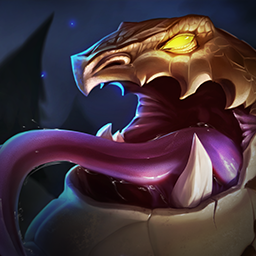
Belchy Bubble Adaptor : Belch a noxious bubble at the current target that explodes on the first enemy hit, dealing 225 / 340 / 535 magic damage. Enemies within a 1 hex radius of the explosion take 180 / 270 / 435 magic damage over 3 seconds. Adaptor : Heavily slows the target. Purple Buff: Every 5 seconds, Gromp gains 30% Ability Power.
-
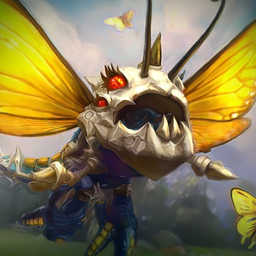
Noxious Blast Poison the target and the nearest non-poisoned enemy, dealing 425 / 630 / 1020 magic damage over 15 seconds. Poisons stack. -
Raining Artillery Adaptor : Launch acid at the target and the other nearest enemy, dealing 165 / 250 / 425 physical damage. Enemies below 50% max Health take 231 / 350 / 595 physical damage instead. Adaptor: Damages enemies over time.
-
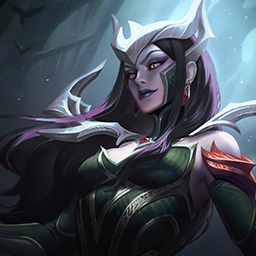
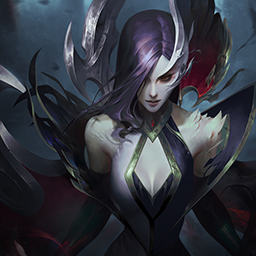
Withering Curse Passive: Gain 25% Omnivamp. Active: Fire a dark blast at 3 nearby enemies, dealing 60 / 90 / 500 magic damage to them and cursing them for 4 seconds. Then, spawn a 2 Hex withering zone for the same duration that deals 33 / 50 / 500 magic damage per second. Cursed enemies take 22 / 33 / 240 more damage per curse.
-
Spirit Rift Fire an arrow through the most enemies in a line that deals 465 / 700 / 1000 physical damage, reduced by 80 / 80 / 40% per enemy hit (minimum 20%). If no enemies are hit refund 70% of mana spent. The arrow leaves a trail for 3 / 3 / 20 seconds that deals 11 / 17 / 220 + 1.5 / 1.5 / 10% max Health physical damage per second to enemies within and 20% Slows them. Slow: Reduce Attack Speed
-
Whirling Death Passive: Attacks target random enemies in range and apply a bleed that deals 150 / 225 / 3000 physical damage over 12 seconds. Every attack has a 12% chance to deal 50 / 50 / 900% bonus physical damage and apply 2 bleeds instead. Active: Throw two giant axes towards the enemy with the most bleeds. Deal 100 / 150 / 400 physical damage to enemies hit and consume their bleed, instantly dealing the remaining damage. The axes then return, dealing 30 / 45 / 100 physical damage to enemies hit. If no enemies are hit refund 50% of mana spent.
-
Heat Without Equal Passive: Attacks deal 75 / 75 / 100% damage to enemies adjacent to the target. Active: Become invulnerable and fly into the air. On return, stun all enemies for 1.25 / 1.25 / 99 seconds, gain 15 / 15 / 100% Omnivamp, and Ignite them for 3 / 3 / 99 seconds. Ignited enemies take 2 / 2 / 20% max Health physical damage per second. Replace this ability with Flame Breath and immediately cast it. Flame Breath: Spew fire at the most enemies in a line through the target, dealing 305 / 465 / 7200 physical damage, reduced by 20% for each enemy it passes through (minimum 20%.) Ignite those enemies for 3 / 3 / 99 seconds. Elder Dragon Buff: Damaging an enemy below 12% Health executes them. -
Firestorm Charge up, gaining 15% Ability Power per Burning enemy. Then, gain 230 / 300 / 3000 Shield for 2.5 seconds and rush through a nearby group of enemies, dealing 80 / 120 / 1500 magic damage to each. After rushing, unleash a 2 Hex firestorm that deals a total of 475 / 715 / 5000 magic damage split among all enemies hit over 2 seconds.













Traits that apply Damage Over Time (1)
Wisps that apply Damage Over Time (1)
What enables Damage Over Time (1)
- Giant's Aura Combat
Your highest Health ally deals 2% max Health damage per second in an area.
See also
Frequently asked questions
-
What does "DoT" mean in TFT, and what forms does it take?
DoT is short for damage over time. It is any effect that ticks damage on a target across several seconds, instead of landing as a single hit.
Only one form is a named keyword: Burn. Burn is a percent-max-Health true-damage tick with its own rules line in game.
Everything else is written in plain ability text. The current set spells it three different ways:
- An ability that applies a "bleed".
- One that applies a "poison".
- Ones that simply say the target takes damage over a number of seconds.
Note: Those three are wording, not separate systems. There is no shared keyword behind them and no rule that treats them as one family.
-
Is "bleed" or "poison" a keyword in TFT the way Burn is?
No. Burn is a real keyword. The words "bleed" and "poison" are not.
Burn is tagged as a keyword in the game data. It also carries a rules gloss that explains what it does. "Bleed" and "poison" are ordinary description text an ability author chose, and no rules line defines them.
That difference matters for more than trivia. Because Burn is a tracked state, other units can read it and react to it. Several abilities in the current set do exactly that: they check whether their target is already Burning.
Note: Nothing reads a bleeding or poisoned target the same way. So those effects never combine with anything. Each one just runs on its own and deals its damage.
-
Does every DoT in TFT deal true damage?
No. This is the most common wrong assumption. Damage type varies by source, and all three types appear in the current set.
- The Burn keyword is true damage. It ignores Armor, Magic Resist, damage reduction, and damage amplification.
- Some ability-applied over-time damage is physical, so Armor reduces it.
- Some is magic, so Magic Resist reduces it.
- Some un-keyworded over-time damage is true damage too, even though it is not Burn.
Note: There is no single resistance that answers all of them. Read the tooltip of the source in front of you. Do not assume a whole family shares one damage type.
Sources
- True damage (TFT) — League of Legends Wiki ("ignores resistances, damage reduction, and damage amplification") (opens in new tab)
- Damage over time — League of Legends Wiki (DoTs come in physical / magic / true flavors) (opens in new tab)
- Burn (TFT) — League of Legends Wiki (true-damage classification) (opens in new tab)
-
How fast does a DoT tick — every second, or faster?
Every DoT carries its own tickrate. The wiki's general rule is that ticks land at one of a few set rates, and each effect specifies which it uses:
- Every 1 second.
- Every 0.5 seconds.
- Every 0.25 seconds.
- Rarely, every 0.125 seconds.
The Burn keyword in TFT is documented as a per-second tick. Ability-applied over-time damage usually states only a total and a duration. That tells you the damage per second, but not the tick interval.
Note: That is fine in practice. The total damage is tick count times per-tick value, so a faster tickrate at the same total is purely cosmetic.
-
Do multiple DoTs on one target stack, or overwrite each other?
It depends on the source. Only Burn has a documented family rule.
Burns never add their percentages:
- A stronger Burn overwrites a weaker one and resets the duration.
- Otherwise the existing tick stays.
For un-keyworded over-time damage there is no shared rule at all. There is no shared keyword to hang one on, so the ability text decides. Some abilities say outright that their own applications stack. Then a second cast adds a second tick rather than replacing the first.
Note: Different sources are always tracked separately. So a Burn and an ability's own over-time damage can run on the same target at once.
-
Do shields absorb DoT ticks, or do they bypass shields?
Normal shields absorb DoT ticks at face value, including the true-damage flavor.
Two wiki pages back this up:
- The TFT-namespaced wiki page on true damage says the bypass clause covers resistances, damage reduction, and damage amplification, but not shields.
- The wiki shield page confirms normal shields absorb every damage type, true damage included.
So a shield that goes up at the start of combat directly trades for several seconds of DoT. Only Health starts dropping once the shield is gone.
Note: Magic-damage and physical DoTs are absorbed the same way.
-
Does a DoT keep ticking after the target becomes untargetable or invulnerable?
Yes, an already-applied DoT keeps ticking. But invulnerability stops it from dealing damage while it is active.
The wiki untargetability rule is direct: "Effects that have already been applied, such as buffs or debuffs, are not invalidated by untargetability". The article names damage over time as a notable example that keeps running.
Invulnerability differs. It reduces incoming damage to zero for its duration. So the DoT clock keeps counting, but the ticks deal nothing.
Note: New DoTs cannot be applied to an untargetable unit while the untargetable window lasts.
-
Does crowd control like stun or silence stop DoTs from ticking?
No. Crowd control disables what the affected unit can do: moving, attacking, casting. It does not interrupt damage the unit is already taking.
The TFT stun page defines a stunned unit as "unable to move, declare attacks, or cast their Special Ability for the duration". It says nothing about incoming damage being blocked. A DoT applied before, during, or after a CC keeps ticking on schedule.
Note: This is part of why stun-plus-DoT pressure feels so brutal. The target can't react and the damage keeps landing.
-
Why are DoTs so often paired with anti-heal (Wound)?
Because they attack the same problem from two sides.
- A DoT keeps chipping a high-Health target every tick, no matter how many resistances are stacked.
- Wound (the in-game keyword for Grievous Wounds) cuts the healing the target uses to claw that damage back.
The default Grievous Wounds value is a 50% reduction on incoming and self healing. The current set's Burn-applying items bundle 33% Wound alongside their tick. Reapplying Wound never stacks the percentage. It refreshes the duration instead. So one consistent source of anti-heal plus the DoT covers the whole fight.
Note: This pairing is a Burn habit specifically. Un-keyworded over-time damage generally arrives without any anti-heal attached.