
Description
Permanent Takedown Stacks are stat gains that keep growing round after round instead of resetting when the fight ends.
Read moreShow less about Permanent Takedown Stacks
The usual trigger is a takedown. The unit banks a stack on every kill or assist and keeps it. So early-round farming compounds into late-game power.
But the trigger is not always a takedown you made.
- Old Growth pays out whenever any enemy dies within three hexes of it. Your strongest Old Growth champion gains 30 permanent max Health each time.
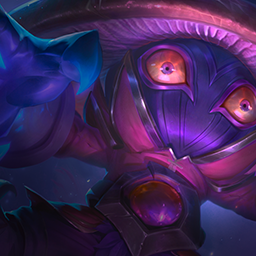
- Veigar banks Ability Power when the enemy it hit dies.
Note: What every source here shares is the persistence, not the kill. The stack survives the round. That is what separates it from in-combat stacking, which starts again from zero every fight.
Listed in: Buffs, Team buffs
Items that scale with Permanent Takedown Stacks (1)
-
- +25% AD
- +25% AS
- +25% AP
The holder dons a Hat on each takedown. The holder gains 1% Attack Damage and Ability Power per Hat. On death lose 20% of all Hats.

Champions that scale with Permanent Takedown Stacks (2)
2 champions · paste in the game's Team Planner
-
Primordial Burst Launch a giant blast at the target that deals 190 / 285 / 430 magic damage, increased to 285 / 430 / 640 if they're below 30% max Health. If they die, permanently gain 2% Ability Power.
-
Mirror Image Passive: After player combat, your strongest LeBlanc has a 10 / 15 / 30% chance to create a copy of an ally on your board, increased by 4% per takedown. Active: Launch a mirror image at the current target, dealing 260 / 390 / 615 magic damage and 100 / 150 / 230 to adjacent enemies.




Augments that scale with Permanent Takedown Stacks (2)
-
 Deadlier Blades Prismatic
 Gain a Deathblade. Deathblades permanently gain 1% Attack Damage whenever their holders score a takedown.
-
 Deadlier Caps Prismatic
 Gain a Rabadon's Deathcap. Rabadon's Deathcaps grant 1 Mana Regen and permanently gain 1% Ability Power whenever their holders score a takedown.
Traits that grant Permanent Takedown Stacks (3)
-
Gather Essence by killing champions, plus more by losing player combat.

Beginning at 40 Essence, choose to convert Essence to rewards or continue gathering Essence. Each reward requires increasing amounts of Essence.
-
Whenever an enemy within 3 hexes dies, your strongest Old Growth champion gains 30 permanent max Health.


See also
Frequently asked questions
-
What is takedown-stacking in TFT?
Takedown-stacking is a scaling pattern where the carrier earns a stack on every takedown. A takedown is a kill or an assist. The stacks stay on the carrier for the rest of the game. They do not reset at the end of the round.
The stack effect varies by source:
- Bonus Attack Damage.
- Bonus Ability Power.
- Armor and Magic Resist.
- Extra attack range.
- A progress bar that unlocks a new payoff at a threshold.
The defining trait is persistence. Every round you survive, the carrier gets stronger. So early-round farming compounds into late-game burst.
Sources
- TFT.Tools — current-set items (Seeker's Armguard: "Takedowns increase the holder's Armor, Magic Resist, and Ability Power by 20"; Hunter Emblem: takedowns grant bonus Attack Damage) (opens in new tab)
- TFT.Tools — current-set augments (Deadlier Blades: "Deathblades permanently gain 1% Attack Damage whenever their holders score a takedown") (opens in new tab)
-
How is takedown-stacking different from in-combat stacking?
Both ramp the carrier mid-fight, but their lifecycle is opposite.
- In-combat stacks reset every round. Anything tagged "this combat" or "per round" starts at zero on the next planning phase.
- Takedown-stacks persist for the rest of the game. Once banked, they stay through wins, losses and round changes until the game ends.
Note: Read the tooltip carefully. The word "permanently" is usually the tell that the stacks stay banked. So is the absence of any "this combat" wording.
-
How is takedown-stacking different from "on-takedown"?
"On-takedown" is the trigger. It fires whenever the holder lands a kill or an assist. Takedown-stacking is one specific payoff shape. It uses that trigger to bank a lasting stat or progress increment.
Plenty of on-takedown effects are not takedown-stacks:
- A few seconds of bonus Attack Speed.
- A dash to the next target.
- A gold drop.
- An extra round of movement speed.
All of these expire at the end of the round or spend themselves right away. Takedown-stacking is the subset whose payoff sticks.
-
What kinds of stacks can a takedown-stacking effect grant?
The common shapes come in two flavors. The first is a continuous stat per takedown:
- A flat percent of Attack Damage per takedown on a weapon.
- A flat percent of Ability Power per takedown on a hat.
- An artifact that bundles Armor, Magic Resist and Ability Power together per takedown.
The second flavor is threshold-based. Every N takedowns, the carrier earns a discrete reward instead of a continuous per-stack stat.
The takedown-collecting trait shows both at once. Its members bank takedowns toward a permanent evolution. They also get a repeating gold payout every eight takedowns. Once the count passes thirty, the whole team picks up an Attack Damage bonus. That bonus keeps growing per additional takedown.
Note: Both flavors share the persistence rule. The gain stays banked.
Sources
- TFT.Tools — current-set items (Seeker's Armguard: "Takedowns increase the holder's Armor, Magic Resist, and Ability Power by 20"; Hunter Emblem: takedowns grant bonus Attack Damage) (opens in new tab)
- Rival (TFT) — League of Legends Wiki (threshold flavor: gold "every 8 takedowns", and after 30 takedowns a team-wide Attack Damage bonus that grows per additional takedown) (opens in new tab)
- TFT.Tools — current-set augments (the per-takedown Attack Damage and Ability Power augments) (opens in new tab)
-
Is there a cap on how many stacks a takedown-stacking effect can hold?
It depends on the source, so always read the tooltip.
- If it says "up to N", the stacks halt at N.
- If it says "every N takedowns" or "whenever" with no ceiling, the gain continues uncapped.
The current per-takedown weapon and hat augments are both written the uncapped way.
One current artifact is the interesting exception to the whole family. It banks a Hat on every takedown and pays a percent of Attack Damage and Ability Power per Hat. But it also takes 20% of those Hats away each time the holder dies. So its counter is neither capped nor strictly permanent. It is a bank that leaks when your carrier keeps falling. That makes protecting the holder part of the scaling plan.
Note: Patch notes tune both the per-takedown value and any ceiling. Treat live numbers as patch-specific and check the current tooltip.
Sources
- TFT.Tools — current-set items (Cappa Juice: "The holder dons a Hat on each takedown… On death lose 20% of all Hats") (opens in new tab)
- Items — tactics.tools (same artifact text, independent listing) (opens in new tab)
- Riot — current patch notes (per-takedown values and thresholds are tuned patch to patch) (opens in new tab)
-
If I sell the carrier, do takedown-stacks on items transfer to the next holder?
Yes. Stacks tied to an item persist with that item.
- When you sell the carrier, the item returns to the bench with its accumulated stacks.
- When you equip the item to a new holder, it keeps those stacks.
Stacks tied to a champion's ability work differently. Kill counters and permanent stats gained on cast belong to that specific unit instance. They are lost when you sell that unit.
Note: The rule of thumb is to read where the stack is displayed. On an item icon, it is item-bound. On the unit's hover tooltip, it is unit-bound.
Sources
- Champion (TFT) — League of Legends Wiki ("selling a champion will move all items they're holding to the bench") (opens in new tab)
- Items — tactics.tools (Seeker's Armguard: "Takedowns increase the holder's Armor, Magic Resist, and Ability Power by 20" — item-bound per-takedown stacks) (opens in new tab)
-
Does starring up a takedown-stacking carrier reset its stacks?
No. Combining copies into a higher star level keeps the stacks the carrier had built up.
- The unit is upgraded in place. Its kill-counter or per-cast permanent gains carry over.
- Stacks on items the unit is wearing also stay on those items through the star-up.
The only common reset path is selling the unit, and then only for unit-bound ability stacks.
Note: Combining never wipes the counter. That is what makes takedown-stacking so valuable on reroll carries.
Sources
- Champion (TFT) — League of Legends Wiki (combine rules and item handling) (opens in new tab)
- TFT.Tools — current-set augments (Deadlier Blades: "Deathblades permanently gain 1% Attack Damage whenever their holders score a takedown" — the stacks live on the item, so they survive a star-up) (opens in new tab)
-
Do takedown-stacks carry across rounds, or do they reset between fights?
They carry. That is the defining property of takedown-stacks.
Once a takedown-stack is banked, it stays on the carrier through every later round for the rest of the game. It does not matter whether you win or lose the round. This is the opposite of in-combat stacking, which resets every round.
Cookpit gathers the takedown-triggered ones on this page. The permanent landing page collects the rest. Those are the gains that ratchet up on a timer, a round tick or an interest payout instead of a kill.
Note: One artifact skims 20% of its own stored Hats each time the holder dies. Those stacks still carry between rounds. They just take a haircut on every death.
Sources
- TFT.Tools — current-set items (the per-takedown artifacts carry across rounds; Cappa Juice is the one that loses a share of its stacks on death) (opens in new tab)
- Rival (TFT) — League of Legends Wiki (the takedown count accumulates across rounds toward permanent evolutions and payouts) (opens in new tab)