
Description
Damage dealt to a unit beyond what was needed to kill it — the excess portion that would otherwise be wasted. Some abilities, items, and augments capture this excess and redirect it as new damage to nearby enemies.
Items (1)
-
- +60% AD
- +60 AP
100% of overkill damage plus 100 is dealt as magic damage to the two enemies nearest to the target.

Augments (2)
-
 Charge Transfer II Gold
 Your team gains 10% Damage Amp. 80% of overkill damage is dealt to the nearest enemy as magic damage.
-
 Charge Transfer I Silver
 Your team gains 7% Damage Amp. 50% of overkill damage is dealt to the nearest enemy as magic damage.
Champions (1)
-
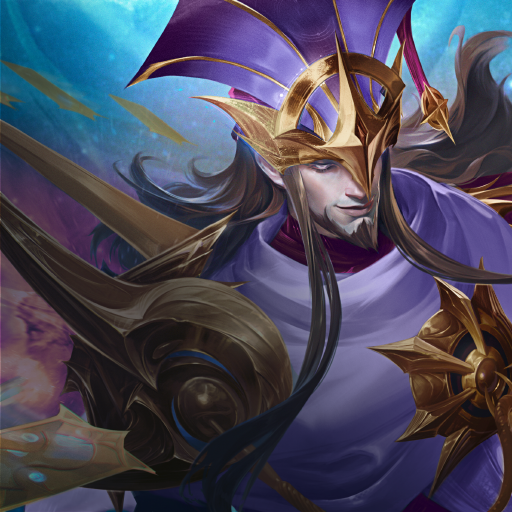
Fate's Gambit Draw a card with a value between 1 and 9 by Lucky chance, then throw it at the target. Based on the card drawn, deal between 205 / 305 / 460 and 410 / 610 / 920 magic damage. Overkill damage bounces to the nearest enemy. 3-Star Bonus: If a 9 is thrown, generate 1 gold. Lucky: Check twice and take the better outcome.


Frequently asked questions
-
What does "overkill" actually mean in TFT?
Overkill is the slice of a damage instance that lands beyond what was needed to kill the target — the excess that would otherwise be wasted on a corpse. By itself it is not a damage type or a global mechanic; nothing happens to overkill unless a specific source explicitly captures it. What turns overkill into a payoff is a per-source clause: an ability with an "if this kills, the projectile continues" rider, an artifact whose passive reads "100% of overkill damage plus 100 is dealt as magic damage to nearby enemies," or an augment that redirects a percentage of overkill to the nearest enemy. Without one of those clauses, the excess simply does not exist as a usable quantity.
Sources
- Luden's Tempest — TFT-namespaced wiki ("100% of overkill damage plus 100 is dealt as magic damage to the … enemies nearest the target") (opens in new tab)
- TFT patch 15.2 notes — Riot ("Luden's Tempest (Artifact) will now trigger its overkill effect when killing K'Sante's first life") (opens in new tab)
-
Does damage past a Shield count as overkill?
No. Overkill is measured against the target's underlying Health pool, not the Shield bar on top of it. A normal Shield in TFT absorbs incoming damage in place of Health and is documented as absorbing physical, magic, and true damage equally; only the portion of a damage instance that survives the Shield reaches Health, and only the portion that exceeds the target's remaining Health then qualifies as overkill. Practically, if a target has lots of Shield left when the killing-blow ability resolves, the overkill payoff is small even when the headline damage number is huge — most of the instance was eaten by the Shield first.
-
How is overkill different from execute?
Execute is a kill outcome — a threshold check that, if it passes, deletes the unit by routing 100% of its current Health through the raw-damage source type, ignoring resists and mitigations. Overkill is the leftover slice after a normal damage instance has already killed the target; it only matters if the source has a clause that captures it. Two consequences fall out: an execute by definition produces zero overkill (the kill was raw, not via excess damage), and an overkill-converting source needs the killing damage to come from a regular damage instance rather than a threshold-execute kill.
-
Does overkill carry over from one target to the next?
Only when the source explicitly says so. Some abilities are written so that, if a projectile kills the first target, it continues and deals overkill to the next enemy hit; some artifacts redirect overkill as magic damage to a fixed number of nearby enemies; some hero abilities have a projectile- or summon-style ricochet that bounces the excess to the closest enemy. None of these carryovers are global behavior — they live in the individual entity's text. If an ability has no overkill clause, hitting for far more than the target's remaining Health is just wasted damage on a corpse.
-
Does Damage Amp or Crit double-dip on overkill carryover damage?
Not anymore — at least on the carry case Riot patched. The 15.2 notes call out that overkill damage "no longer further multiplies its damage with Damage Amp and Crit," and 15.3 followed up to remove a second amplification path during Overtime. The intended rule is that Damage Amp and Crit apply once, on the original damage instance that produced the overkill, and the carried-over portion is then redirected at face value rather than re-amplified at the new target. Older interactions where overkill scaled larger than the initial hit were treated as bugs and corrected.
-
Is there a cap on how much overkill can carry over?
There is no global TFT-wide cap published on the wiki. The cap is whatever the source's text says, and it varies. Some sources convert 100% of overkill plus a flat bonus and split it among a fixed number of nearby enemies; some augments convert only a fraction of overkill (for example, a partial percentage to the nearest single enemy); some ability-based carryovers continue at full value into the next enemy a projectile hits but stop there. The text you should trust is the entity's own tooltip — there is no hidden "overkill is capped at X% of next target's max HP" rule to read into it.
-
I dealt huge damage but only a tiny bit carried over — why?
Two things to check. First, overkill is measured against the target's *remaining* Health, not its max — if it was already low when the killing instance landed, the overkill slice is small no matter how big the headline number was. Second, only the source that actually produced the killing damage instance carries; if a different ability had already chunked the target down to single digits and your carrier merely tapped it dead, the overkill on that final tap is what gets converted, not the giant hit that came before. Overkill is per-source and per-killing-instance, not a running total of the fight.