
Description
A Clone spawns a duplicate of an existing unit.
The copy typically inherits the original unit's items.
Champions that grant Clones (1)
1 champion · paste in the game's Team Planner
-
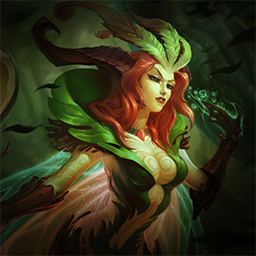
Mirror Image Passive: After player combat, your strongest LeBlanc has a 10 / 15 / 30% chance to create a copy of an ally on your board, increased by 4% per takedown. Active: Launch a mirror image at the current target, dealing 260 / 390 / 615 magic damage and 100 / 150 / 230 to adjacent enemies.


Wisps that grant Clones (1)
What enables Clone (1)
- Clone Companion Combat
Clone your highest damage champion. The clone deals 20% damage.
Frequently asked questions
-
What exactly is a 'clone' in TFT?
A clone is a specific type of pet: a copy of a champion that is already on your board.
An ability, an item, an augment, or a Wisp can spawn one. The wiki says:
- A clone is "a specific type of pet that is a copy of a champion, copying their star-level upon creation".
- "Depending on the source, it may also copy their items".
Clones are a sub-category of summons with one extra requirement. The unit being copied has to exist first. So a clone can never hand you a champion you do not already own.
Current clone sources come in two shapes:
- A copy that appears during a fight and is gone when the round ends.
- A copy handed to you between rounds. It joins your roster as a real champion you place and equip yourself.
Sources
- Clone tip — League of Legends Wiki ("a specific type of pet that is a copy of a champion, copying their star-level upon creation") (opens in new tab)
- LeBlanc (TFT) — League of Legends Wiki (champion passive that creates a copy of an ally on your board) (opens in new tab)
- Riot — Enchanted Wilds overview (LeBlanc "has an increasing chance to create copies of an ally on your board as she gets takedowns") (opens in new tab)
-
Does a clone inherit the source unit's items?
It depends on the source. The source's own tooltip is the rule.
The wiki says a clone copies the champion's star level on creation. It adds that "depending on the source, it may also copy their items". Inheritance is never automatic, so read what the effect actually promises.
The current sources:
- The death-triggered augment copy names only a star level and a share of Health.
- The Wisp copy names only a share of the original's damage.
Neither advertises items.
A between-rounds copy that lands on your board is a different case again. It arrives as an ordinary champion, so it carries whatever you put on it.
Note: Where items are inherited, they arrive in their current state. A one-shot item effect that already fired in that fight will not fire again on the copy.
Sources
- Clone tip — League of Legends Wiki ("Depending on the source, it may also copy their items") (opens in new tab)
- TFT.Tools — current-set augments (Nesting Dolls states star level and Health, not items) (opens in new tab)
- LeBlanc (TFT) — League of Legends Wiki (the board copy is an ordinary champion you equip yourself) (opens in new tab)
-
Does a clone count toward trait piece counts?
No for a copy that appears during combat, yes for a copy handed to you between rounds.
The combat case is the most-reversed-by-intuition rule. Trait bonuses are worked out from the champions you field before the round starts. Each champion carries an origin and a class. Satisfying the count is what grants the bonus. Anything that spawns after the fight is already running cannot move a counter that was settled in the planning phase.
The copy still benefits from every trait bonus already active on your team. It just does not push you to the next breakpoint. Cloning a fourth piece of a trait mid-fight does not make it five.
A copy handed to you between rounds is the opposite case:
- It is a real champion added to your board.
- It takes a slot.
- It counts for its origin and class exactly like the unit it was copied from.
Sources
- Clone tip — League of Legends Wiki (a clone is "a specific type of pet", not a fielded champion) (opens in new tab)
- Champions (TFT) — League of Legends Wiki ("Satisfying the origin or class conditions grants bonus effects") (opens in new tab)
- Riot — Enchanted Wilds overview (LeBlanc's copies are created "on your board") (opens in new tab)
-
What stats does the clone actually inherit?
The copy starts from the original. It then takes whatever discount its source names.
The wiki's baseline is that a clone copies the champion's star level at the moment it is created. Every source then writes its own trade-off on top:
- The death-triggered augment copy spawns one star level lower and at 60% Health.
- The Wisp copy of your highest-damage champion deals 20% of that champion's damage.
The shape is consistent across sources. It is a cut to Health, damage, or star level. Otherwise the copy is stat-equivalent to the unit it copied.
A between-rounds board copy carries no discount at all. It is simply another instance of that champion.
Sources
-
Can the clone cast its own abilities?
Yes, when the source spawns a full copy of the champion rather than a stripped-down pet.
A copy that duplicates the champion at a star level brings that champion's ability with it. It builds its own Mana bar from its own attacks and from damage taken. It casts on its own schedule. It does not share a Mana bar with the unit it copied.
Sources that hand you a between-rounds board copy are the clearest case. The copy is a normal champion in every respect.
Note: Sources that spawn a reduced combat copy are the ones to read carefully. A copy created with a fraction of the original's damage casts the same ability. But every number in it is scaled down by that fraction.
Sources
- Clone tip — League of Legends Wiki (a clone copies the champion, star level included) (opens in new tab)
- TFT.Tools — current-set augments (Nesting Dolls spawns the champion one star level lower, ability included) (opens in new tab)
- op.gg — Enchanted Wilds set guide (Clone Companion Wisp: the clone deals 20% damage) (opens in new tab)
-
If the source unit dies, does the clone die too?
No. Clones are independent units once spawned.
A clone has its own Health pool. It takes damage on its own. It dies on its own when that pool runs out. The source dying does not despawn the clone, and the clone dying does not kill the source.
The clearest illustration in the current set is the augment that spawns a copy only after a champion dies in combat. The copy exists precisely because the original is already gone, so it plainly cannot be tethered to it.
Note: The reverse also holds. An on-death trigger on the original does not fire when the copy dies. The trigger is bound to that unit's death, not the copy's.
-
How long does a clone last on the board?
It depends on which of the two shapes you got.
A combat copy is a combat-only unit:
- It lives until it is killed or the round ends.
- It is not carried into the next round. The effect has to fire again to produce another one.
- The augment copy is re-created each combat, on each death that triggers it.
- The Wisp copy lasts for the rounds the Wisp itself covers.
A between-rounds board copy is the opposite. It is a permanent champion on your roster. It persists across rounds like any unit you bought. You can sell, position, star up, and equip it.
Sources
- TFT.Tools — current-set augments (Nesting Dolls re-triggers per in-combat death, with no across-round persistence clause) (opens in new tab)
- Riot — Enchanted Wilds overview (LeBlanc creates copies "on your board") (opens in new tab)
- Riot — current patch notes (Wisps are bought in the planning phase and most last a single round) (opens in new tab)
-
How is a clone different from a regular summon?
A clone is a sub-category of summon, with one extra constraint: it has to copy a unit you already have.
The two differ in what they spawn:
- A regular summon spawns a fresh entity, such as a plant, a beast, or a spirit. It has its own kit and its own stats, tied to no champion on your board.
- A clone spawns a duplicate of a unit you already placed. It has the same kit, and it inherits the star level and sometimes items.
What they share:
- Both are pets.
- Both benefit from active traits.
- Neither combat-spawned form counts toward trait piece counts.
The wiki tip is explicit about the relationship. A clone is "a specific type of pet that is a copy of a champion". If the spawn is not tied to copying a unit you already own, it is a summon but not a clone.
Sources
- Clone tip — League of Legends Wiki ("a specific type of pet that is a copy of a champion" — clone as a sub-category of pet/summon) (opens in new tab)
- Zyra (TFT) — League of Legends Wiki (a summon with its own kit: plants that attack on their own, copying no board unit) (opens in new tab)
- LeBlanc (TFT) — League of Legends Wiki (a copy of a unit already on your board) (opens in new tab)