
Description
On Death is a trigger that fires when the unit itself is killed.
Read moreShow less about On Death
It is common on items that bank value during combat (see damage-storage). They release that stored value as one final payload when the unit dies.
Items that benefit from On Death (5)
-
- +25% AD
- +25% AS
- +25% AP
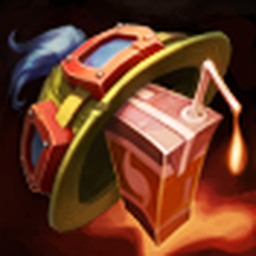
The holder dons a Hat on each takedown. The holder gains 1% Attack Damage and Ability Power per Hat. On death lose 20% of all Hats.
-
- +55 Armor
- +55 MR
Every 3 seconds, Shields the lowest percent Health ally for 70% of the holder’s combined Armor and Magic Resist for 5 seconds. On death grants this shield to all allies.
-
- +300 HP
- +10% Durability
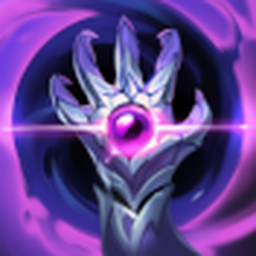
Combat Start: Store 30% max Health and 2.5% more every second. On death, unleash the stored Health as magic damage split between enemies within 4 hexes. Unique - only 1 per champion
-
- +250 HP
The holder gains the Juggernaut trait. Gain 10 mana whenever a Juggernaut dies.
Your team gains Durability. Juggernauts gain more.
- 2
- 4% Durability or 20% Durability
- 4
- 6% Durability or 30% Durability
- 6
- 8% Durability or 42% Durability
-
Your team gains +1 maximum team size. 10% chance to drop 1 gold when the holder dies. Imbued with a Philosopher's wisdom...



Champions that benefit from On Death (5)
What benefits from On Death (5)
5 champions · paste in the game's Team Planner
-
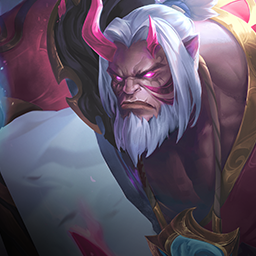
Last Rites Passive: On death, spawn a Spirit Walker with 330 / 634 / 1171 max Health which immediately taunts, forcing enemies to attack it. Active: Restore 280 / 325 / 435 Health and strike the target, dealing 150 / 225 / 340 physical damage.
-
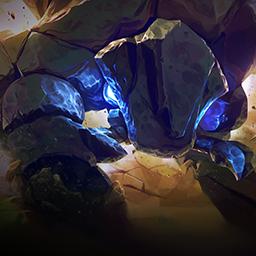
Rock and Roll Passive: On death, split into two Kruglettes with 182 / 338 / 608 Health which immediately taunt, forcing enemies to attack them. Active: Gain 175 / 225 / 325 max Health, then roll into the target, dealing 223 / 358 / 620 damage. Slate Buff: On death, Krug and Kruglettes Shield allies for 8% max Health.
-
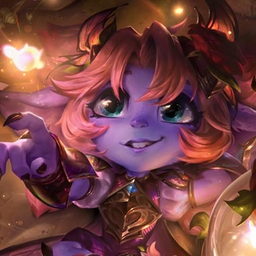
Explosive Charge Attach an explosive charge to the target that lasts 4 seconds. While active, gain infinite range and 60% Attack Speed. After the duration, the charge explodes and splits damage between all enemies within 2 hexes, dealing 175 / 265 / 420 physical damage + 10 / 15 / 25 for each attack while casting. If an enemy with an explosive charge on them dies, it attaches to Tristana's new target.
-
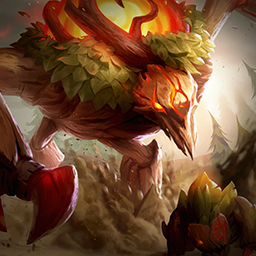
Crimson Fury Passive: When the target dies, leap at the next target, dealing 135 / 205 / 1000 physical damage. Active: Gain 100 / 100 / 300% Attack Damage for 8 seconds. During this time ignore 45 / 45 / 90% Armor. Red Buff: Attacks 1% Burn enemies and heal Brambleback for 4% max Health.
-
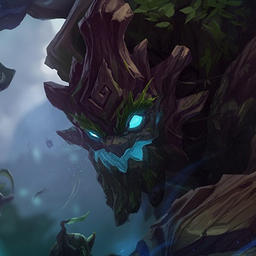
Sow the Seeds Passive: After every 650 / 650 / 300 damage blocked, a sapling jumps towards a nearby enemy and deals 81 / 145 / 2795 magic damage. On death, 3 / 5 / 10 saplings jump out. Active: Deal 69 / 124 / 3726 magic damage to target and restore 330 / 400 / 2000 + 10 / 10 / 100% missing Health.








Augments with On Death effects (4)
-
 Healing Orbs II Gold
 When an enemy dies, a nearby ally is healed for 575 Health.
-
Gain 4 gold. For the next 2 rounds, enemy champions drop 2 gold when killed.
-
 Good For Something I Silver
 Champions that aren't holding items have a 40% chance to drop 1 gold on death.
-
 Healing Orbs I Silver
 When an enemy dies, a nearby ally is healed for 250 Health.

Traits that benefit from On Death (1)
-
Whenever an enemy within 3 hexes dies, your strongest Old Growth champion gains 30 permanent max Health.
Wisps with On Death effects (8)
What enables On Death (8)
- Big Boom Combat
The first ally to die explodes, dealing 25% Max Health magic damage.
- Combust Combat
Your champions explode on death, dealing 15% Max Health magic damage.
- Fertilize Risky
Gain 1 XP for each enemy that dies.
- Killer's Regret Combat
Your first 3 champions to die stun their killer for 1.5 seconds.
- Petrified Dummy Combat
Your first champion to die turns into a 900 Health dummy with their defenses.
- Pocket Change Gold & XP
Your one-star champions drop 1 gold on death.
- Propagate Champion
Gain a copy of the first allied champion to die.
- Revenge Combat
Whenever an ally dies, your champions gain 4% stacking Damage Amp.
Frequently asked questions
-
What does "on death" actually mean in TFT?
On-death is a trigger that fires the moment a unit's combat health reaches 0. That is when it falls in the current round.
The unit returns next round at full health regardless. So "death" here means the in-combat removal event, not permanent loss. Effects keyed to it discharge a stored payload at the instant of that event.
All three of the classic shapes are live right now.
- An artifact that banks Health through the fight and detonates it.
- A Wisp and an augment that drop gold when the right unit falls.
- Several champion passives that leave a fresh body on the board: a spirit, two smaller rock creatures, or a wave of saplings.
Note: The trigger is always a one-shot per combat per unit. Once the unit has fallen, that combat's on-death has fired.
Sources
- Champion (TFT) — League of Legends Wiki ("Champions are removed from combat when their health reaches 0") (opens in new tab)
- Yorick (TFT) — League of Legends Wiki ("On death, spawn a Spirit Walker … which immediately taunts") (opens in new tab)
- TFT.Tools — current-set items (Void Gauntlet: "On death, unleash the stored Health as magic damage") (opens in new tab)
-
If the on-death payload deals true damage, do shields still block it?
Yes.
True damage in TFT ignores Armor, Magic Resist, damage reduction, and damage amplification. The TFT-namespaced wiki is explicit that those are the only carve-outs. Shields are not on that list.
Normal shields absorb every damage type: physical, magic, and true. So an on-death area-of-effect (AoE) blast that fires as true damage still gets soaked. Any shield the targets have up at the moment of the explosion absorbs it.
Either way, pre-positioned shields on the back line are the cleanest counter-pattern, because they work against every flavor.
Note: Check the damage word before you plan around it. The on-death area payloads currently in the game are typed magic rather than true. So Magic Resist and percent damage reduction cut them as well.
Sources
-
Do multiple on-death sources on the same unit all trigger?
Generally, yes.
Each on-death source is its own discrete trigger keyed to the unit's death event. So stacking different on-death items, traits, or augments on one unit generally fires every one of them when that unit falls.
Mixing one damage-storage on-death with one shield-on-death with one gold-drop on-death is the normal pattern. They each resolve.
A champion's own on-death passive is a fourth, separate lane again. It belongs to the unit rather than to anything it is holding. So it fires alongside whatever the items do.
Note: What does not stack additively is two copies of the same effect. Most TFT items cap at one copy per unit. The on-death artifacts are single-equip. One of them prints "Unique - only 1 per champion" directly in its own rules line.
Sources
- Item (TFT) — League of Legends Wiki (one-copy-per-unit and stacking rules) (opens in new tab)
- TFT.Tools — current-set items (Void Gauntlet's stored-Health detonation and Lightshield Crest's on-death team shield are separate single-equip artifacts) (opens in new tab)
- Krug (TFT) — League of Legends Wiki (a champion-side on-death passive that resolves independently of held items) (opens in new tab)
-
How is an on-death area payload spread over the enemies it catches?
It depends on the verb, because the two shapes behave in opposite ways. Neither one fades with distance.
The dominant current shape is a split. The artifact that banks Health all fight long releases it "as magic damage split between enemies within 4 hexes". So the total is fixed, and the radius is a flat yes-or-no boundary.
- Catching one lone enemy dumps the entire stored payload onto that single unit.
- Catching six divides the same total six ways.
That inverts the usual positioning advice. Against a split blast you want your own units clustered inside the radius, because more bodies sharing it means less damage each. You also want the enemy carrier detonating next to your whole team rather than isolated on your carry.
The second shape is an undivided explosion. Every enemy in the area takes the printed amount independently. The current Wisps that make your champions explode on death work this way. Against those, spreading out is correct.
Note: In neither shape does a unit one hex from the epicentre take more than a unit at the edge of the radius.
Sources
- TFT.Tools — current-set items (Void Gauntlet: "unleash the stored Health as magic damage split between enemies within 4 hexes") (opens in new tab)
- Items — tactics.tools (same artifact text: a fixed stored total divided across everything inside the radius) (opens in new tab)
- op.gg — Enchanted Wilds set guide (Combust and Big Boom Wisps: champions explode on death for a percent of max Health, with no split clause) (opens in new tab)
-
Is "becoming invulnerable for a moment before dying" the same as on-death?
No. Those are death-prevention effects, a separate layer that resolves before the death event, not at it.
A per-unit example is a defensive item that triggers at a Health threshold. The unit briefly becomes untargetable, sheds negative effects, and heals. So it cannot be hit down to 0 during that window. Its on-death does not fire, because it never falls.
On-death triggers, by contrast, only resolve once a unit's health has actually reached 0.
The two layers are independent. A death-prevention skip can preempt one death-event. But every subsequent fall still procs on-death normally.
Note: Distinct from both is the player-elimination escape. An augment that lets you survive what would otherwise eliminate you keeps YOU in the lobby. It does not save a single unit in combat.
Sources
- TFT.Tools — current-set items (Edge of Night: "At 60% Health, briefly become untargetable, shed negative effects, and heal" — a pre-death escape, not an on-death) (opens in new tab)
- Champion (TFT) — League of Legends Wiki (death = removed from combat at 0 HP) (opens in new tab)
- Items — tactics.tools (Edge of Night: 60% Health untargetable, sheds negatives, heals missing Health) (opens in new tab)
-
Is selling a unit treated as death for on-death triggers?
No, in practice.
Selling happens out of combat, so there is no combat health reaching 0. It is not the trigger event that on-death effects key off. On-death payloads are uniformly described as firing in-combat at the death moment. Some items are also described as firing on a fallback timer.
The TFT-namespaced wiki documents on-death effects only in combat-tied terms. Selling returns the unit to the pool and its items to inventory.
Treat "died this combat" and "sold this round" as fully separate game events.
Note: This is a community-confirmed convention. No wiki source documents an exception.
-
What's the difference between on-death (the dier side) and on-kill / on-takedown (the killer side)?
The difference is which unit owns the trigger.
On-death is a trigger on the unit that fell. Its own items, traits, or augments fire when its HP reaches 0.
On-kill and on-takedown are triggers on the unit that did the killing or assisting. An entirely different unit's effects bank credit when an enemy falls.
The two often resolve in the same instant against the same target. But they belong to different units' rule sheets.
An untargetable or invulnerability window, like a defensive item's Health-threshold escape, denies the attacker on-kill credit. It keeps the target from ever reaching 0. For that same reason the target's own on-death does not fire either. Both hinge on the one death event.
Note: The two sides are otherwise independent. Stack-on-takedown items keep stacking on the killer regardless of whether the killed unit had any on-death payload.
Sources
- Takedown — League of Legends Wiki (a takedown = a kill or assist; credit only banks when an enemy actually goes down) (opens in new tab)
- Champion (TFT) — League of Legends Wiki (combat death framing) (opens in new tab)
- Items — tactics.tools (untargetable/invuln escapes — e.g. Edge of Night at 60% Health — that suppress an attacker's kill credit) (opens in new tab)