
Description
Protective state where the unit ignores incoming crowd control (stuns, slows, knock-ups) for a duration. The unit can still be targeted and damaged. Distinct from Untargetable (cannot be hit) and Invulnerable (takes no damage).
Listed in: Buffs
Items (5)
-
- +20 MR
- +15% AS
- +20% Crit
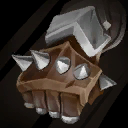
Combat Start: Gain immunity to crowd control for 18 seconds. Gain 3% stacking Attack Speed every second.

-
- +20 Armor
- +10% AS
Gain 2% Attack Damage and 2% Ability Power when attacking or taking damage, stacking up to 25 times. At full stacks, gain 10% Damage Amp and gain immunity to crowd control.


-
- +40 MR
- +40% AS
- +40% Crit
Combat Start: Gain immunity to crowd control for 45 seconds. Gain 6% stacking Attack Speed every second.
-
- +40 Armor
- +20% AS
Gain 4% Attack Damage and 4% Ability Power when attacking or taking damage, stacking up to 25 times. At full stacks, gain 20% Damage Amp and gain immunity to crowd control.
-
- +20% Crit
The holder gains the Rogue trait. At 50% health, gain 25% Omnivamp and immunity to crowd control for 5 seconds.
Rogues gain Attack Damage and Ability Power. The first time they fall below 50% health, they slip into shadows. Enemies targeting them are redirected to a nearby unit, preferring Tanks.
- 2
- 12%
- 3
- 25%
- 4
- 40%
- 5
- 55%





Frequently asked questions
-
What exactly does CC Immune block in TFT?
CC Immune negates incoming crowd-control effects — the disable layer of stun, root, silence, charm, fear, taunt, knock-up/airborne, and the slow/chill (attack-speed reduction) family. The unit is still on the board, still selectable as a target, and still takes full damage; only the disables are blocked. CC Immune does not block resistance shreds (Sunder/Shred), healing-reduction (Wound), or burn — those are debuffs, not crowd control. So a CC-Immune carry can still be magic-resist-shredded and burned while immune to the stun that would have stopped them casting.
-
Does CC Immunity remove existing crowd control, or only prevent new CC?
Only prevents new CC. The wiki tip is explicit: CC Immunity "prevents any type of crowd control from being applied to the unit," and "CC which has already been applied will still have an effect on the unit." If a stun lands on a unit at second 0 and an immunity buff is applied at second 0.3, the original stun keeps ticking until its duration ends — only stuns that try to land after the immunity is up are negated. To strip an active stun you need a cleanse, not an immunity buff. This is the single most common CC-Immune misconception.
-
Is Tenacity the same as CC Immunity?
No — they're separate mechanics. Tenacity is a percent reduction applied to incoming disable durations: 30% Tenacity turns a 2.0s stun into 1.4s, with a 0.3s floor. CC Immunity is binary: incoming CC is fully negated for the duration of the immunity, or it isn't. Tenacity also has carve-outs (it does not reduce airborne/knock-up duration, and excludes a handful of effects like stasis and suppression in LoL); CC Immunity in TFT covers those airborne effects too, since airborne is implemented as a stun + forced movement and the stun layer is what's negated.
-
Does CC Immune block knock-ups and airborne effects?
Yes, in TFT it does. Airborne in TFT is defined as moving the unit to a destination while "also stunned and unable to move, declare attacks, or cast their Special Ability" for the duration — the disable layer is a stun, and CC Immunity negates the stun layer along with the forced movement. This differs from Tenacity, which explicitly does not reduce airborne duration. So a CC-Immune carry isn't just stun-proof during the window — they also can't be knocked up, and any knock-up cast on them while immune fails to apply.
-
Does CC Immunity block slows and attack-speed reductions (Chill)?
Yes. Slow and Chill (the attack-speed-reduction family used by traits and ability tooltips) are both forms of crowd control — Slow sits on the crowd-control list alongside stun, root, silence, and airborne, and Chill is the attack-speed-reduction form of slow — so CC Immunity blocks them outright. A CC-Immune unit will not be slowed and will not lose attack speed from a Chill source for the duration of the immunity. Note this is wider than Tenacity's coverage (Tenacity reduces slow duration but cannot zero it out); CC Immune simply prevents the slow from applying.
Sources
-
What's the difference between CC Immune, Untargetable, and Invulnerable?
Three different protection layers. CC Immune blocks the disable layer (stun, root, slow, knock-up, etc.); the unit is still targetable and still takes damage. Untargetable means abilities and basic attacks that require a target cannot pick the unit, but they still take splash/AoE damage and ongoing damage-over-time. Invulnerable means the unit takes 0 damage from all sources, including true damage, but can still be targeted and CCed. A unit can be more than one at once — e.g., stasis effects make a unit untargetable AND invulnerable for a short window.
-
How long does CC Immunity last — is it permanent or windowed?
Almost always windowed. The canonical TFT pattern is a fixed-duration combat-start window — the textbook Quicksilver-style item grants "immunity to crowd control for 18 seconds," measured from combat start. Once the window expires, CC lands normally for the rest of the fight. A handful of trait-actives or augments grant immunity for the full combat or while a stack-cap condition holds, but those are the exception. Practical consequence: late-fight CC still pins a CC-Immune carry once their early-combat shield expires, so plan finishers around the window's end.
-
Are CC Immunity and Cleanse the same thing?
No, they're opposites in timing. A Cleanse actively removes CC effects that have already been applied — it's reactive, fired after the unit is stunned/rooted/etc. CC Immunity is preventative: it blocks new CC for the duration of the immunity but does nothing to debuffs already on the unit. Many items and traits combine the two (apply both an instant cleanse and a follow-up immunity window) precisely because immunity alone can't save a unit that was already CC'd before the buff applied. If you only see one of the two on a tooltip, the other is not implied.